16 October 2026 · The Rosco Team
I increased my overheads and my architecture practice finally made money
Hiring someone felt like the last thing a stretched one-person practice could afford. It turned out to be the fix. Here's the maths, and how to work out a true hourly rate for everyone in your studio.
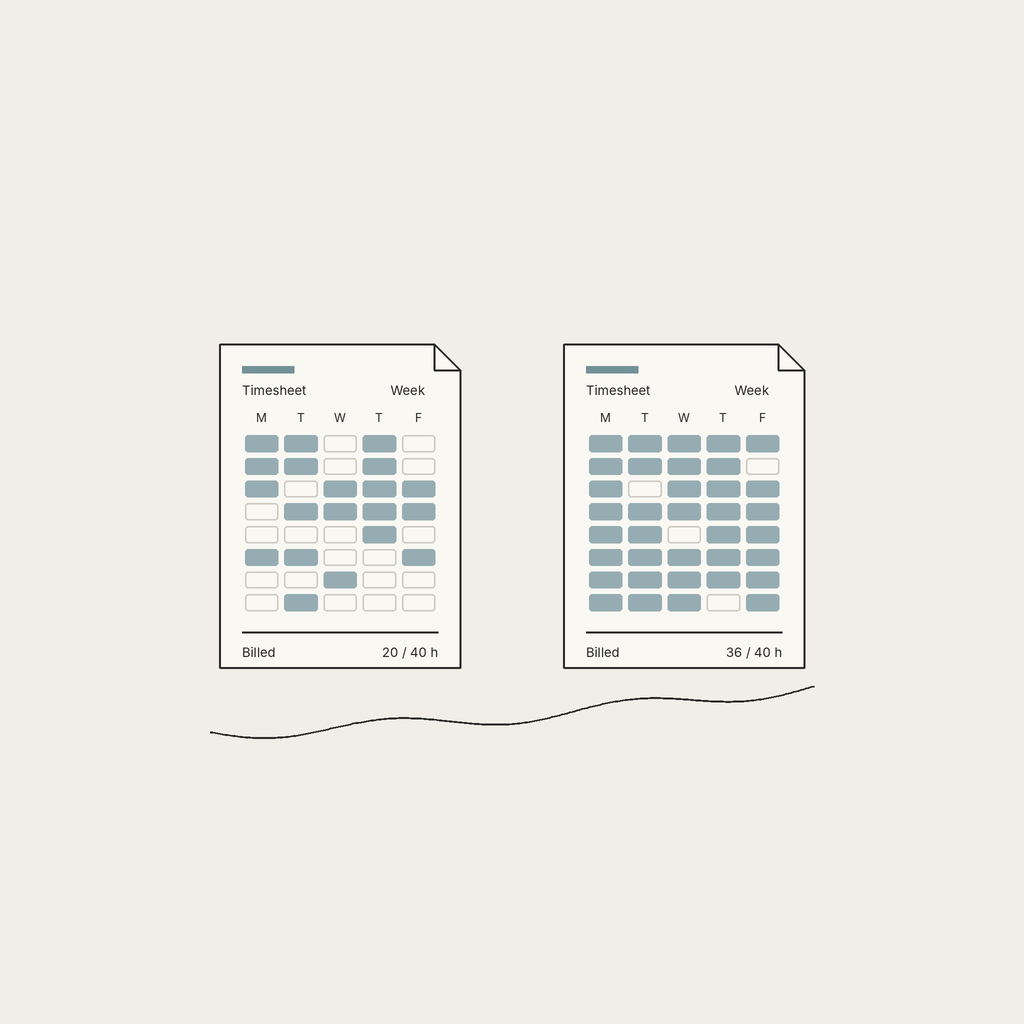
From the Rosco journal — what running a small studio teaches you about practice management.
Doing everything, billing half
The decision that finally made the practice profitable was the one that made our costs go up.
For years it was just me. The design work, the admin, the leads, the invoicing, the accounts. On a good week, half my hours were billable.
Everything the practice earned went straight back out as my salary. The account never grew. I assumed that was simply the price of being small.
Adding a salary I couldn't afford
So I did the thing that felt backwards. I lowered my own salary and hired someone.
It looked like adding overhead to a business that was barely covering the overheads it had. One more salary, more super, another computer, another software licence.
Then the numbers came in. They were billing about 90% of their week. I was still at 50%, because the admin hadn't gone anywhere. For the first time, the practice was bringing in enough to cover itself, plus some.
The maths I should have done years earlier
At twice your true hourly cost, billing 50% of your week is break-even. Billing 90% of it leaves a margin of about 44%.
My charge-out rate was double what an hour of my time really cost the practice, once super, leave and overheads were counted. That sounds healthy. It isn't, if only half your hours ever reach an invoice.
Here's a typical week. The dollar figures are rounded to keep the arithmetic simple; the ratios are real.
| Me | My first hire | |
|---|---|---|
| True hourly cost | $60 | $45 |
| Charge-out rate | $120 | $90 |
| Hours billed (of 40) | 20 (50%) | 36 (90%) |
| Billed this week | $2,400 | $3,240 |
| Cost this week | $2,400 | $1,800 |
| Left over | $0 | $1,440 |
Same multiplier, lower rate, very different week. My hours paid for themselves and nothing more. Theirs left $1,440, about 44% of everything they billed.
The rule underneath it fits on one line:
Break-even rate = true hourly cost ÷ share of hours billed
At 50% billable, you have to charge twice your cost just to stand still. I'd spent years worrying about my rate. The number I'd never looked at was the share of my week that got billed.
How to work out a true hourly rate
A true hourly cost is a year's cost of employing someone, divided by the hours they're actually at work. Salary is only where it starts.
- Start with salary. Use the full annual figure, or the pro-rata figure for part-timers.
- Add the on-costs. Super is 12%, and since Payday Super began on 1 July 2026 it's paid with every pay run. Add workers' compensation (your insurer will give you the rate), leave loading if your award or contracts include it, and payroll tax only if your total payroll is over your state's threshold.
- Add their share of running the studio. Software seats, computer, desk, insurance, CPD, a slice of rent. The simplest approach is a year of overheads split by full-time-equivalent staff.
- Count the hours they're actually at work. 52 weeks × 38 hours is 1,976. Take off four weeks of annual leave, 10 days of personal leave and about 10 public holidays, and you're at roughly 1,672.
- Divide. Total cost ÷ hours at work = true hourly cost.
A worked example for one full-time employee:
| Item | Amount |
|---|---|
| Salary | $90,000 |
| Super (12%) | $10,800 |
| Workers' compensation (illustrative) | $1,000 |
| Share of studio overheads | $15,000 |
| Total cost for the year | $116,800 |
| Hours at work | 1,672 |
| True hourly cost | about $70 |
Now apply the rule from earlier. If this person bills 90% of their hours, anything under about $78 an hour loses money. At 75% billable, the floor is $93. At 50%, it's $140. Same person, same salary, three very different floors.
Then do it for yourself, because owners usually skip this step. Use the salary you'd have to pay someone else to do your job, not what you happen to draw. If you underpay yourself, your true hourly cost looks lower than it is, and so does your break-even.
What I'd tell my earlier self
The overhead that was really costing me wasn't the salary I was scared to add. It was the unbillable half of my own week.
- Admin is overhead, even when you do it yourself. When the most expensive person in the practice spends half the week on work nobody pays for, that's the biggest cost on the books. It just never appears on one.
- A hire is only overhead if there's no work for them. Before hiring, check the pipeline can keep someone busy, and that your rate clears true cost divided by share billed. Ninety per cent is a lot to ask of anyone; at 75%, the same 2× rate still leaves about a third of what they bill.
- You can't manage a number you can't see. Utilisation lives in your timesheets, tracked against stages. It's why the Fees tab in Rosco, our practice management software, puts the fee, the hours quoted, the hours spent and the hours still to go side by side.
I still do the admin. I just stopped pretending it was free.
This is part of an ongoing Rosco journal on what we've learned running a small studio and building practice management software around the way small architecture practices actually work.
Sources
- Super guarantee rates and Payday Super, Australian Taxation Office, updated 17 April 2026